Blue Pottery of Jaipur: The Art of Painting with Persian Blue
In the vibrant city of Jaipur, where history is painted on every wall, there exists an art form that captures the very essence of the sky and the grace of a peacock’s feather. This is Blue Pottery, a craft so unique and enchanting that it has become a symbol of the city itself. Unlike any other pottery in the world, this luminous art form uses no clay. Instead, it is a magical blend of quartz, glass, and earth, painted with a mesmerizing turquoise blue that seems to hold a piece of heaven.
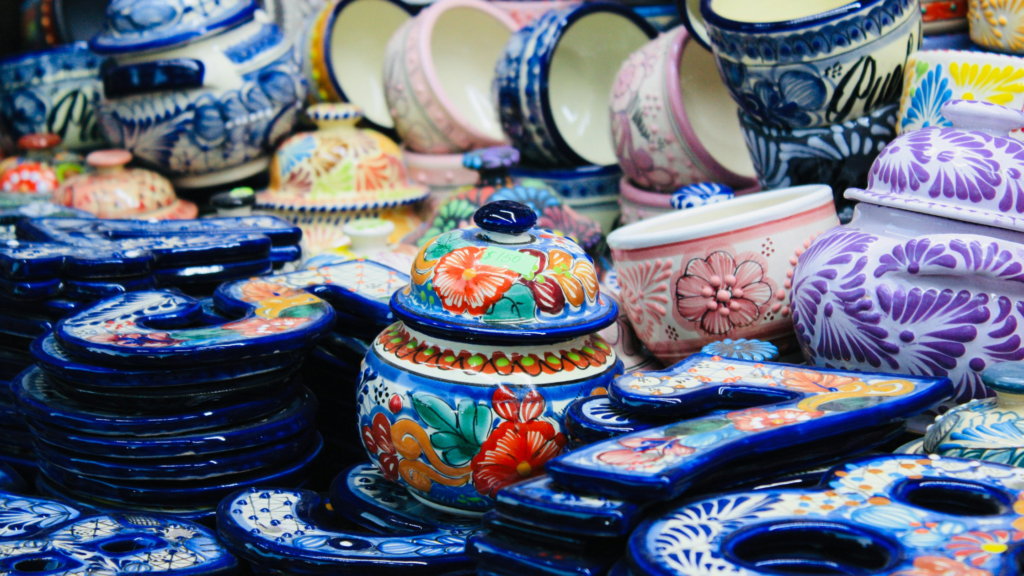
A journey into the world of Blue Pottery is a journey through time—from the grand courts of Persia and the Mughals to the bustling artisan workshops of modern-day Jaipur. It is a story of how a craft became a cherished heritage.
A Whisper from History: The Origins of a Royal Art
The story of Blue Pottery begins not in India, but in the glazed tile-work that adorned the magnificent mosques and tombs of Central Asia. This technique, blending Mongol-Chinese glazing methods with elegant Persian motifs, traveled to India with Turkic and Mughal artisans.
While the craft existed in India for centuries, it found its royal home in Jaipur in the early 18th century under the patronage of Maharaja Sawai Jai Singh II, the visionary founder of the city. It truly flourished under Maharaja Sawai Ram Singh II in the 19th century, who was so captivated by its beauty that he sent local artisans to be trained by Persian masters. Soon, the palaces and grand buildings of Jaipur, including the iconic Albert Hall Museum, were adorned with these brilliant blue tiles, cementing Blue Pottery as a symbol of royal elegance.
Today, this precious legacy is protected by a GI (Geographical Indication) tag and lovingly carried on by over 200 artisan families in villages like Sanganer, who are the modern-day keepers of this ancient flame.
The Alchemist’s Secret: A Clay-Free Creation
What makes Blue Pottery truly unique is what it’s made of—or rather, what it’s not made of. There is no clay in its composition. The dough is a special “frit” mixture, a secret passed down through generations:
- Quartz Stone Powder (50-60%): The body of the pottery.
- Glass Powder (20-30%): For melting and binding.
- Multani Mitti (Fuller’s Earth, 10-15%): For plasticity.
- Borax, Katira Gond Gum, and Soda Bicarbonate: For workability.
This unique blend makes the final product lighter, more fragile, and semi-translucent compared to traditional clay pottery. The iconic blue color comes from cobalt oxide, while other colors like sunshine yellow and earthy green are created using other metallic oxides.
The Artisan’s Dance: A 10-Step Journey
Creating a single piece of Blue Pottery is a patient dance of art and science, a process that can take up to 10 days.
- Dough Preparation: The raw materials are ground, sieved, and kneaded into a pliable dough.
- Molding: The dough is carefully pressed into Plaster-of-Paris (POP) molds to create the desired shape.
- Drying & Polishing: The piece is air-dried for a couple of days before being demolded and polished smooth with sandpaper.
- Coating: It is then dipped in a quartz slurry to create a smooth, white surface for painting.
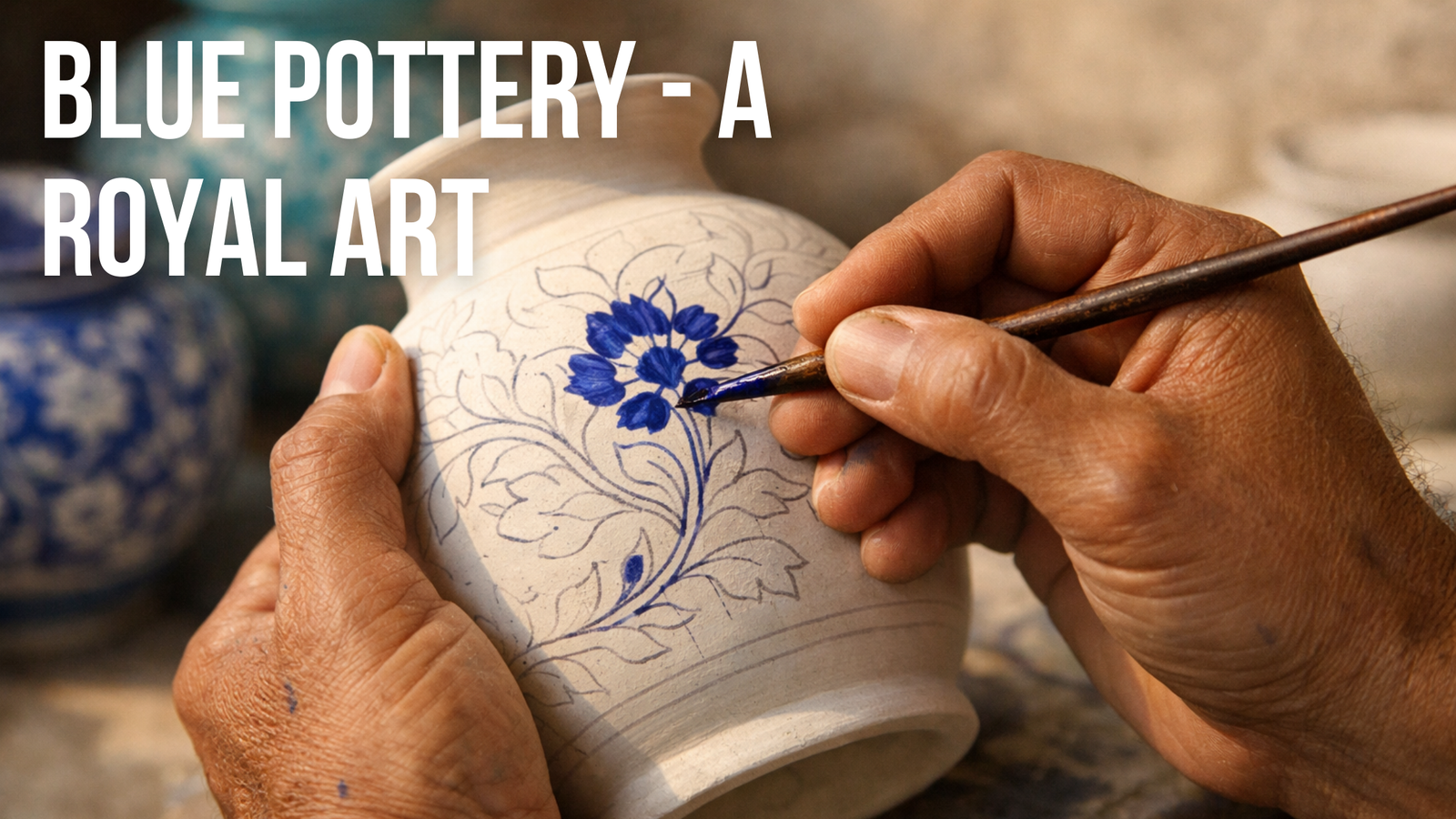
- The Artist’s Touch: This is where the magic happens. Using fine brushes, artisans paint intricate designs freehand—Mughal florals, geometric patterns, and graceful birds.
- Glazing: A transparent glaze is applied over the painting to seal the design and give it its signature sheen.
- Trial by Fire: The pieces are carefully placed in a kiln and fired at a low temperature of 800-850°C for 8-12 hours. This is the most crucial step, where 20-30% of pieces can be lost to cracking.
- Cooling & Inspection: The kiln is left to cool for a full day before the finished pieces are inspected.
- Final Polish: A final buffing brings out the brilliant luster.
- Packaging: The fragile treasures are carefully wrapped, ready to begin their new journey.
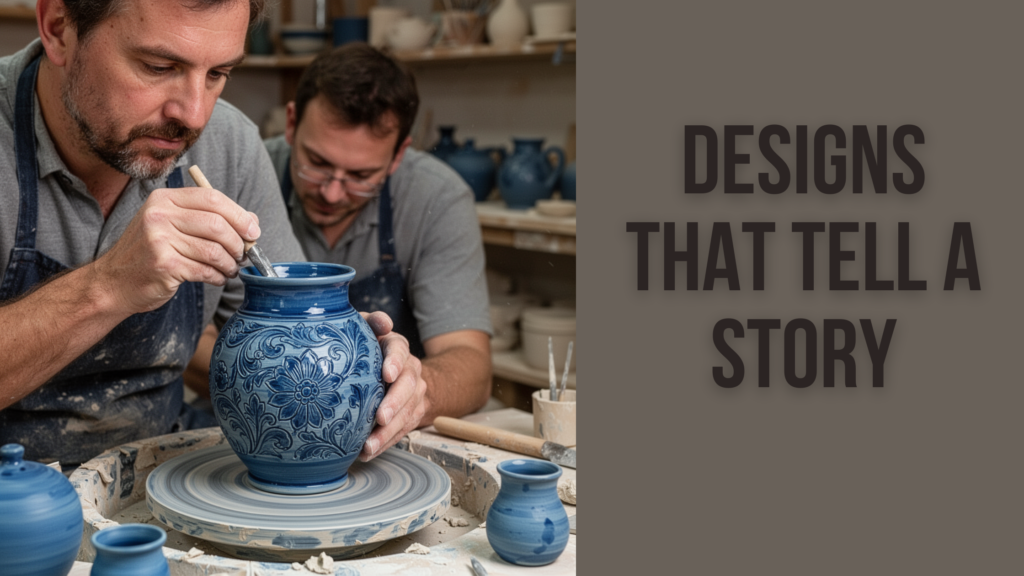
Designs That Tell a Story
The motifs on Blue Pottery are a beautiful blend of cultures. You will find Persian-Islamic geometry dancing with Mughal florals like the poppy and the lotus. You will see Rajasthani elements like the tree-of-life and the majestic peacock, a symbol of Jaipur itself. While artisans now experiment with modern and abstract designs, the classic blue and white combination remains the soul of the craft.
From decorative vases, plates, and lamps to utilitarian items like doorknobs and tiles, Blue Pottery brings a touch of royal heritage to any space. It is more than just a souvenir; it is a piece of Jaipur’s history, a testament to the enduring beauty of handcrafted art. To hold a piece of Blue Pottery is to hold a story of kings, artists, and a culture that continues to whisper its tales through strokes of brilliant blue.
FAQs
The main difference is the material. Regular pottery is made from clay, whereas Jaipur’s Blue Pottery is made from a unique frit mixture of quartz stone powder, powdered glass, and other binders. It contains no clay, which makes it more fragile and gives it a distinct semi-translucent quality.
Yes, traditionally made Blue Pottery that uses food-safe glazes is safe for serving food. However, as it is a fragile, low-fired ceramic, it is not microwave or dishwasher safe. It is best used for serving dry foods or as decorative tableware.
It gets its name from the eye-catching Persian blue dye used to color the pottery. This signature color is derived from cobalt oxide, which creates the brilliant turquoise and blue hues when fired. While other colors are now used, the craft is overwhelmingly dominated by this iconic blue.
Authentic Blue Pottery is lighter than typical ceramics due to its quartz composition. Look for intricate, hand-painted designs rather than machine-printed patterns. The GI (Geographical Indication) tag is also a mark of authenticity, ensuring the product is made in the Jaipur region using traditional methods.