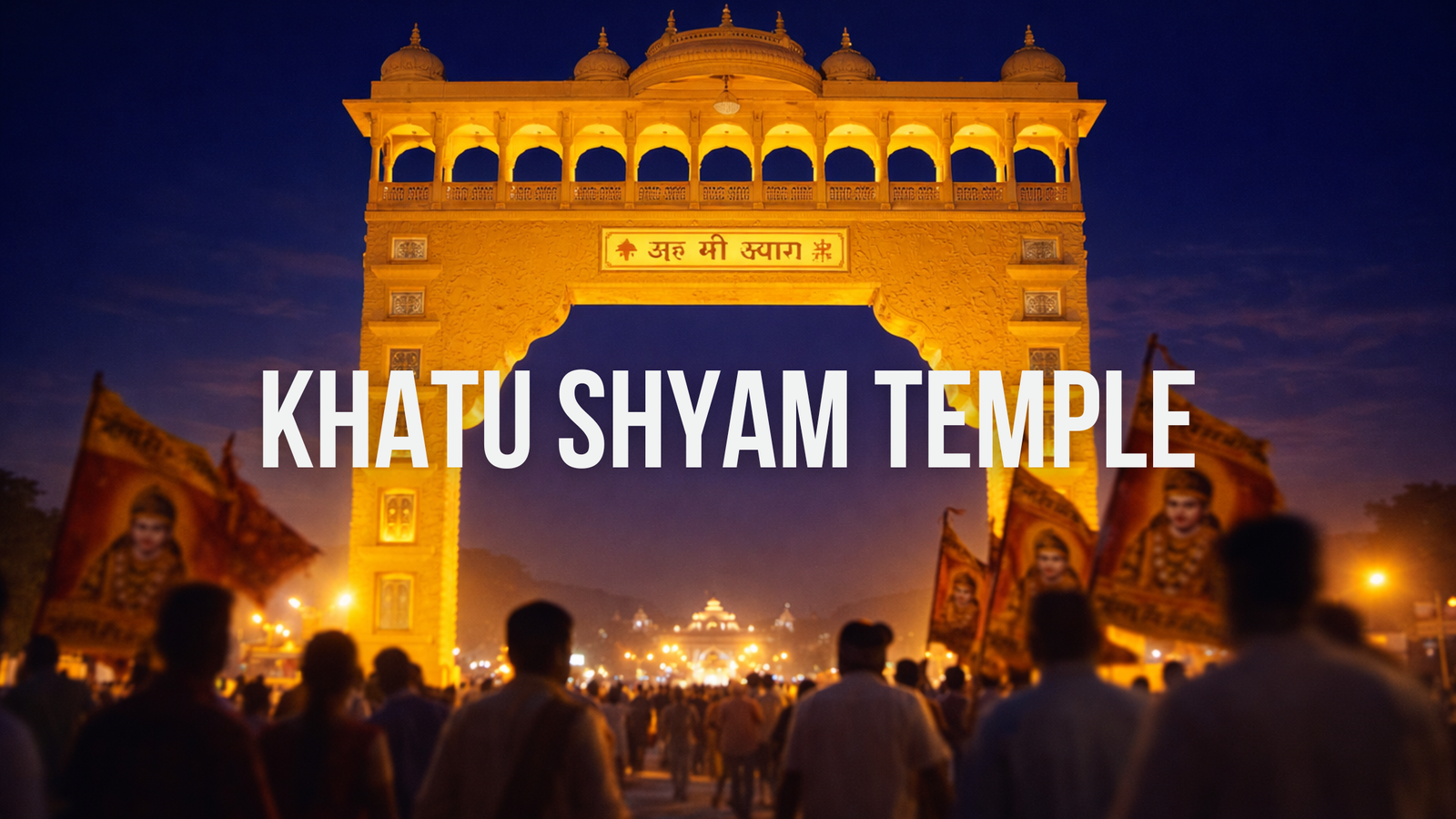
Khatu Shyam Ji: A Journey to the God of the Defeated
In the heart of Rajasthan’s Sikar district, amidst the arid landscapes, lies a place where faith flows like a mighty river. This is the sacred town of Khatu, home to the revered temple of Khatu Shyam Ji. This is not just a destination; it is a pilgrimage of the heart, a journey to meet the deity affectionately known as the Haare ka Sahara—the God of the Defeated.
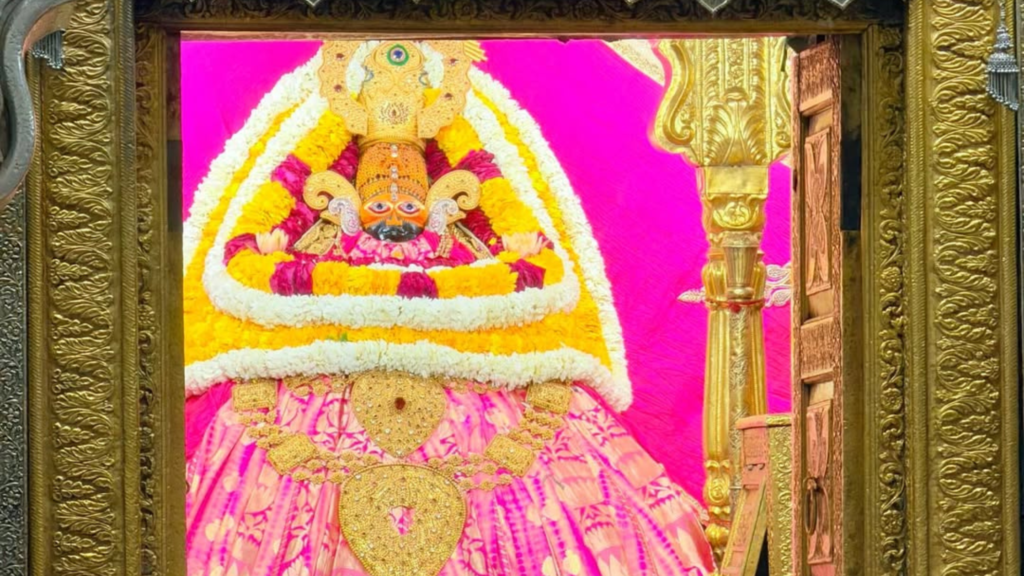
For millions of devotees, the name Khatu Shyam Ji is a mantra of hope. It’s a promise that no matter how lost, broken, or defeated one might feel, there is a divine presence ready to offer support. A visit to this temple is an experience that fills the soul with peace, courage, and an unshakable sense of being looked after.
The Legend: The Story of a Great Sacrifice
To understand the temple, one must first know the story of its divine resident. Khatu Shyam Ji is the manifestation of Barbarika, the grandson of the mighty Pandava, Bhima, and the son of Ghatotkacha.
Barbarika was a warrior of immense power, blessed with three infallible arrows from Lord Shiva. These arrows were so potent they could end the entire Mahabharata war in a single minute. He promised his mother he would fight for the side that was weaker, the one that was losing.
Lord Krishna, knowing that Barbarika’s presence would lead to the complete annihilation of both armies, decided to test him. Disguised as a Brahmin, Krishna asked Barbarika for a donation (daan). When Barbarika offered him anything he desired, Krishna asked for the ultimate sacrifice: the warrior’s head.
Without a moment’s hesitation, Barbarika understood the divine play. He offered his head to Krishna, asking only for one boon in return—to be able to witness the entire Mahabharata war. Krishna, moved by his supreme sacrifice, granted his wish and blessed him, declaring that in the Kali Yuga, Barbarika would be worshipped by Krishna’s own name, Shyam. He would become the ultimate support for those who felt lost and defeated.
It is said that Barbarika’s head was found in the holy Shyam Kund in Khatu, and the temple was built to enshrine this sacred form.
Why is the Temple So Famous? The God of Hope
The fame of Khatu Shyam Temple rests on this profound promise. Devotees come from all corners of the world with their troubles, their prayers, and their unwavering faith. They believe that a sincere prayer to Baba Shyam never goes unanswered. The temple is a sanctuary for those carrying heavy burdens, offering them a spiritual shoulder to lean on. The atmosphere is electric with devotion, and the chants of “Haare ka Sahara, Baba Shyam Hamara” (Our Baba Shyam, the support of the defeated) create a powerful vibration of hope.
Sacred Celebrations: When the Temple Comes Alive
While the temple is filled with devotees year-round, there are two occasions when the town of Khatu transforms into a sea of devotion.
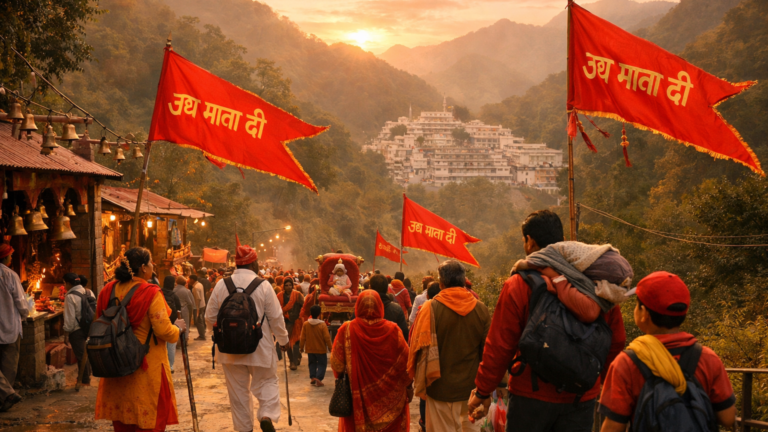
- Lakkhi Mela (The Fair of Lacs): This is the temple’s main festival, held annually in the month of Phalguna (usually February/March). The name “Lakkhi” comes from the word lakh (one hundred thousand), as millions of devotees, known as Shyam Bhakts, undertake a padayatra (pilgrimage on foot) to the temple. Many walk for days from nearby cities, singing hymns (bhajans) and carrying colorful flags (nishans). It’s a breathtaking spectacle of faith and endurance.
- Baba Shyam’s Birthday (Kartik Shukla Ekadashi): Also known as Devuthani Ekadashi, this day in the month of Kartik (October/November) is celebrated as the birthday of Khatu Shyam Ji. The temple is magnificently decorated, and a special Prasad of Kheer is offered and distributed. It is a day of immense joy and celebration.
Planning Your Journey: How to Reach Khatu Shyam Ji
Reaching this sacred abode is a well-trodden path.
- By Air: The nearest airport is Jaipur International Airport (JAI), which is approximately 95 km away. From the airport, you can easily hire a taxi or take a bus to reach Khatu.
- By Rail: The closest railway station is Ringas Junction (RGS), located just 17 km from the temple. Ringas is well-connected to major cities like Delhi and Jaipur. From the station, you can find plenty of local taxis and auto-rickshaws to take you to the temple.
- By Road: Khatu is well-connected by road. Regular bus services are available from major cities in Rajasthan like Jaipur, Sikar, and Bikaner, as well as from Delhi. Driving your own vehicle is also a comfortable option.
Tips for Your Visit
- Darshan Timings: The temple timings can vary, especially during festivals. It’s always a good idea to check the official temple website for the latest schedule before your visit.
- Accommodation: Khatu has numerous dharamshalas (pilgrim guesthouses) and budget hotels to suit all needs. It’s advisable to book in advance during the Lakkhi Mela.
- Offerings: Devotees typically offer flowers, coconuts, and Prasad. You can also offer a Nishan (a sacred flag) as a symbol of your faith.
A journey to Khatu Shyam Temple is more than just a visit; it’s a profound experience of surrender. It is a place where you can lay down your burdens and walk away with a heart full of hope, knowing that you have found your Sahara.
FAQs
The legend states that Khatu Shyam Ji is Barbarika, who sacrificed his head to Lord Krishna before the Mahabharata war. Krishna blessed him to be worshipped in the Kali Yuga. His head was later found buried in the land of Khatu and was enshrined in the temple. The body was left in his birthplace, Hisar.
The temple can be visited year-round. However, the most spiritually charged times are during the annual Lakkhi Mela (February/March) and on Baba Shyam’s Birthday during Devuthani Ekadashi (October/November). The weather is also pleasant between October and March.
“Haare ka Sahara” is the most famous title for Khatu Shyam Ji. It translates to “The Support of the Defeated.” This name embodies the core belief that Baba Shyam provides hope, strength, and support to those who feel lost, have failed, or are facing insurmountable challenges in their lives.
On a normal day, Darshan can take anywhere from 30 minutes to an hour. However, during festivals like the Lakkhi Mela, on Ekadashi days, and on weekends, the queues can be very long, and it may take several hours. It’s best to plan accordingly.