Triyuginarayan Temple: Where Gods Witnessed an Eternal Vow
In the serene Himalayan heights of Uttarakhand, nestled in the Rudraprayag district, lies a temple where whispers of a divine love story echo through the ages. This is the Triyuginarayan Temple, a place that is not just built of stone and wood, but of an eternal vow. It stands as a sacred testament to the celestial wedding of Lord Shiva and Goddess Parvati, making it a pilgrimage for souls seeking the essence of divine union.
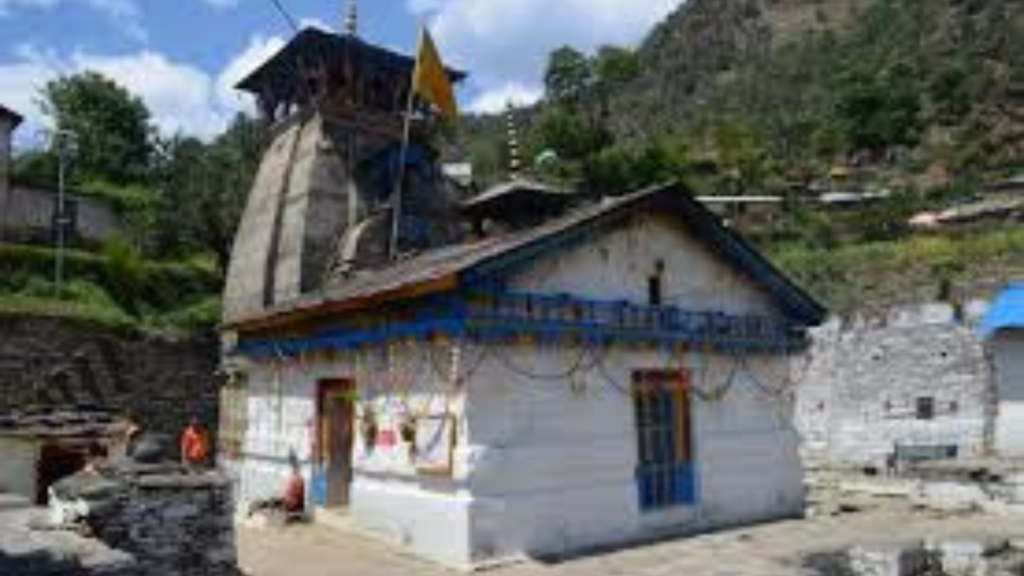
At an altitude of 1,960 meters, this ancient temple, dedicated to Lord Vishnu, is more than a destination; it’s an experience. It’s where mythology breathes, where an eternal flame still flickers, and where the majestic peaks themselves seem to stand as silent witnesses to a love that saved the universe.
The Legend: A Wedding for the Ages
The story of Triyuginarayan is the story of a love that transcended lifetimes. After her self-immolation as Sati, the divine feminine energy was reborn as Parvati, the daughter of King Himavan, the lord of the mountains. Her devotion to Lord Shiva was absolute, and after years of intense austerities, Shiva, finally moved by her resolve, sent the Saptarishis (the seven great sages) with his proposal of marriage.
The celestial wedding was set to take place at Triyuginarayan, the capital of King Himavan. It was an event for the entire cosmos. The divine architect Vishwakarma built the sacred structures. The creator, Lord Brahma, served as the head priest, officiating the ceremony. The preserver, Lord Vishnu, played the crucial role of Parvati’s brother, performing the sacred rituals and reassuring her parents. The devas and celestial beings gathered from all realms to witness this divine union.
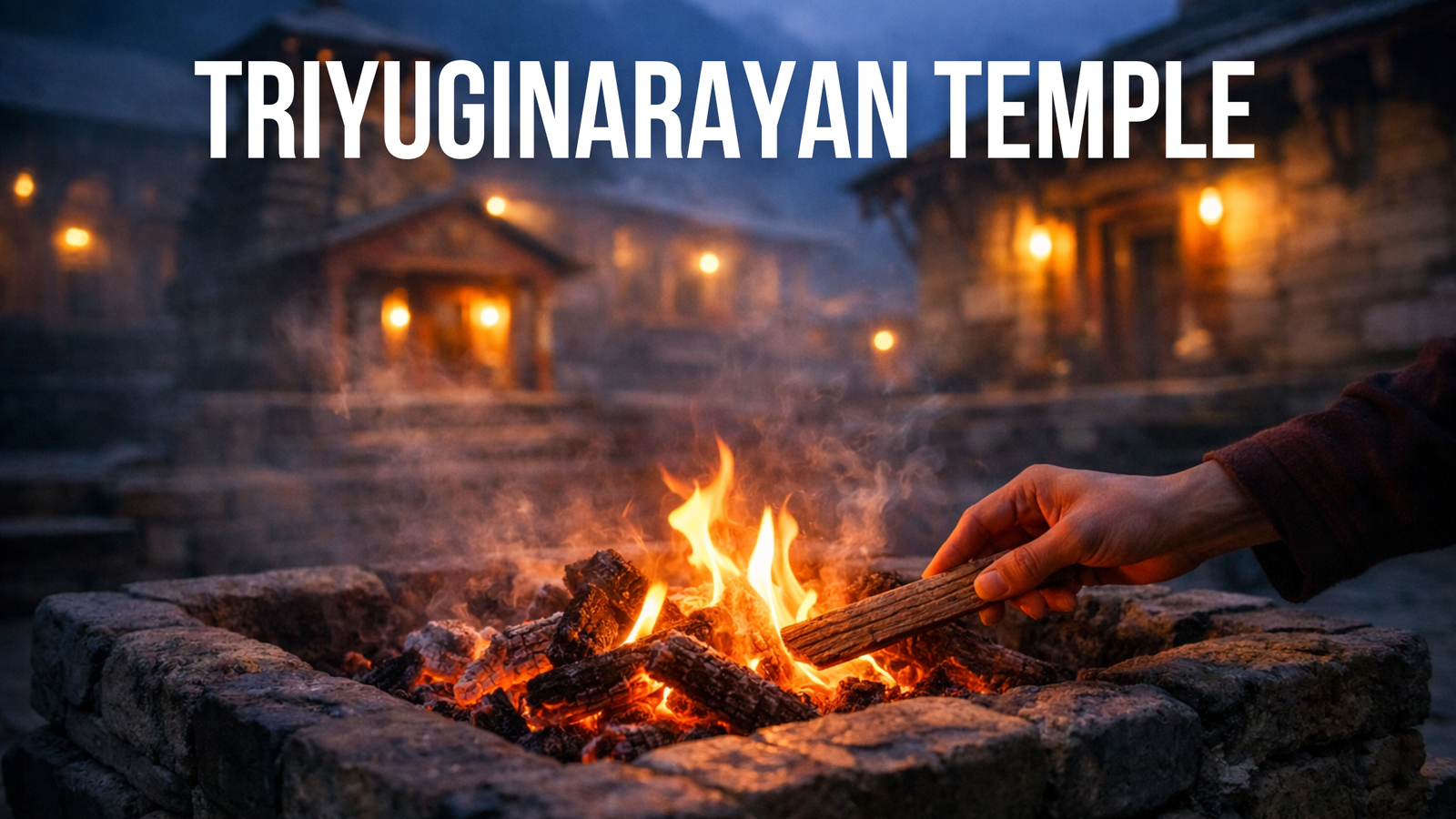
Here, before a sacred havan fire, the Akhand Dhuni, Shiva and Parvati took their eternal vows, circling the flames in their pheras. This marriage was not just a union of two beings; it was the restoration of balance and harmony to the universe, the sacred merging of consciousness (Shiva) and energy (Shakti).
The Heart of the Temple: Sacred Symbols and Sights
Visiting Triyuginarayan is like stepping into the legend itself. The key elements of that celestial wedding are still present today.
- The Akhand Dhuni: The temple’s most sacred feature is the eternal flame. The very fire that witnessed the divine vows still burns in a stone kund. For centuries, pilgrims have added wood (samidha) to this fire, keeping the flame alive. The ashes from this Dhuni are considered a holy prasad, believed to grant marital bliss and fertility.
- Brahma Shila: A stone slab marks the exact spot where the wedding ceremony was conducted.
- The Four Sacred Kunds: Before the wedding, the gods bathed in four sacred ponds, which still exist today. Devotees often bathe in them sequentially for purification and blessings:
- Rudra Kund: For purification.
- Vishnu Kund: For cleansing.
- Brahma Kund: For sustenance.
- Saraswati Kund: For wisdom.
Architecture and History
The temple’s architecture is a beautiful blend of North Indian Nagara style with local Garhwali influences, built with stone and deodar wood. It is believed to have been renovated by the great philosopher Adi Shankaracharya in the 9th century. The main shrine houses a stunning silver idol of Lord Vishnu, flanked by Goddess Lakshmi and Goddess Saraswati, a reminder of his role as the divine witness to the wedding.
A Profound Connection to Maha Shivratri
The legend of Triyuginarayan temple is the very essence of why Maha Shivratri is celebrated as the “Great Night of Shiva.” The festival commemorates this sacred marriage, symbolizing the triumph of devotion and the ultimate union of Shiva and Shakti. Pilgrims flock to the temple, especially during Maha Shivratri, to feel the powerful vibrations of this divine love and even perform their own pheras around the eternal fire.
How to Reach This Sacred Abode
Reaching this divine destination is a pilgrimage in itself.
- By Air: The nearest airport is Jolly Grant in Dehradun (approx. 90 km away).
- By Rail: The closest major railway stations are in Haridwar and Rishikesh (75-100 km away).
- By Road: From Rishikesh/Haridwar, one must drive to Rudraprayag. The temple is about 18 km from Rudraprayag, with the final stretch being a more rugged road. Taxis and buses are available.
- By Trek: For the adventurous soul, a moderate 7-10 km trek from places like Srinagar or Jakholi offers breathtaking views of rhododendron forests.
The best time to visit is between October and June. It’s wise to carry cash, as modern amenities like ATMs are scarce in this serene abode.
Triyuginarayan is more than a temple. It is a promise frozen in time—a place where you can feel the warmth of an eternal flame and be reminded that the most powerful force in the universe is a love that is pure, devoted, and divine.