India AI Impact Summit 2026: A New Dawn for Conscious Technology
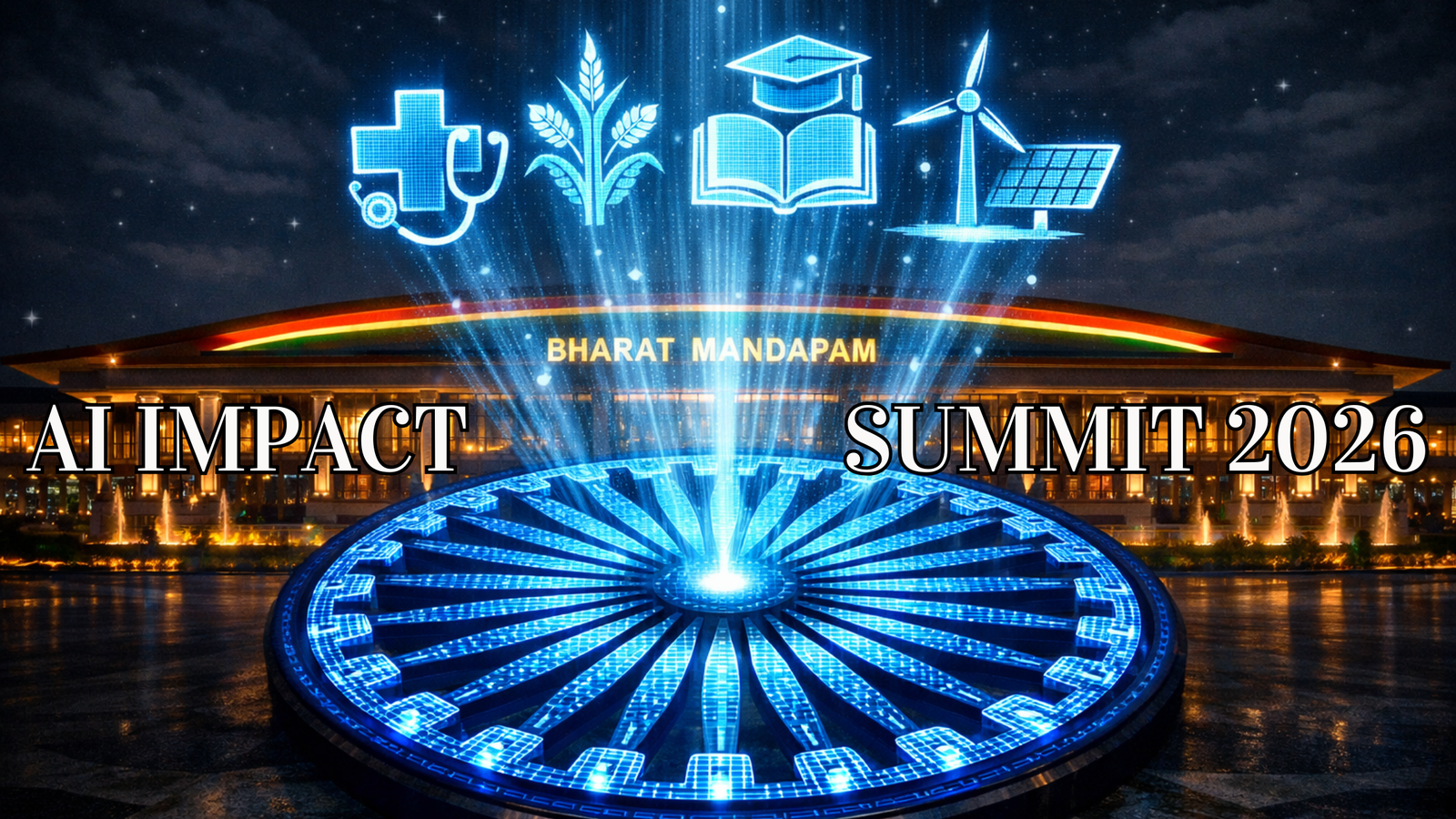
For one remarkable week in February, the heart of New Delhi, Bharat Mandapam, transformed into the global epicenter of a new technological renaissance. The India AI Impact Summit 2026 was not just another conference; it was a profound declaration. From February 16th to 21st, India didn’t just join the global conversation on Artificial Intelligence—it reshaped it, steering the dialogue away from fear and towards hope, from exclusivity to inclusion.
Here at Whispering Bharat, we often explore the timeless wisdom that has guided this land for millennia. At this summit, we witnessed that same ancient ethos—of balance, of collective good, and of human-centric progress—being woven into the very fabric of our technological future. With over 500,000 attendees, from world leaders to humble startups, this was the moment India claimed its role as the voice of the Global South in the age of AI.
A Shift in Perspective: People, Planet, Progress
Unlike previous global summits that focused heavily on the potential risks of AI, the India AI Impact Summit, organized by MeitY under the IndiaAI Mission, took a refreshingly different approach. The guiding principle was not what AI could break, but what it could build. The summit was structured around three core pillars: People, Planet, and Progress.
This vision was further broken down into seven “Chakras” or energy centers, each guiding discussions towards tangible outcomes:
- Human Capital: Reskilling our workforce for an AI-powered future.
- Inclusion: Building local, multilingual AI that serves everyone.
- Safe AI: Ensuring ethical and trustworthy technology.
- Resilience: Using AI to solve challenges like climate change.
- Science: Pushing the boundaries of research.
- Democratizing Resources: Ensuring equitable access to data and computing power.
- Economic Growth: Creating new avenues for prosperity.
The goal was clear: to create AI that serves humanity, not just a select few.
The World Gathers in New Delhi
The summit drew an unprecedented gathering of global thought leaders. The guest list was a testament to India’s growing influence, including French President Emmanuel Macron, Brazilian President Luiz Inácio Lula da Silva, and leaders from Spain, Switzerland, Sri Lanka, and over 45 other nations.
The titans of the tech world were also present. Jensen Huang of Nvidia, Sam Altman of OpenAI, Demis Hassabis of Google DeepMind, and Indian-born leaders like Sundar Pichai of Google and Shantanu Narayen of Adobe all shared the stage. Their presence resulted in over $270 billion in investment pledges, a massive vote of confidence in India’s AI ecosystem.
Prime Minister Narendra Modi set the tone, not with a speech, but with an action. He was publicly seen testing the Kaze AI smartglasses from Indian startup Sarvam AI, a powerful symbol of India’s shift from being a user of technology to a creator of it.
Sarvam AI: The Whisper of a Sovereign Future
Perhaps the most exciting moments of the summit came from homegrown innovator Sarvam AI. The Bengaluru-based startup unveiled a suite of truly Indian AI models, built on Indian infrastructure and trained on Indian languages.
- Sarvam 105B (Vikram): A flagship foundation model trained from scratch on over 10 Indian languages. This is India’s first fully independent large language model, a crucial step towards digital sovereignty.
- Multimodal Tools: Sarvam also showcased incredible text-to-speech models that understand Indian accents and vision models that can read Indian scripts.
- Kaze AI Smartglasses: India’s first AI hardware, these everyday-looking glasses can listen, see, and respond, offering hands-free AI assistance.
This “Made in India” AI is not just a matter of national pride; it’s about building technology that understands our unique context, our languages, and our needs.
Beyond Talk: Tangible Outcomes
The summit was not just about inspiring speeches; it was about creating concrete results. Over 15 tangible deliverables were announced, including:
- The New Delhi Declaration: Signed by over 70 nations to create a framework for ethical AI governance.
- AI Commons Framework: A revolutionary idea to share computing power and datasets with the Global South, preventing a Big Tech monopoly.
- India’s entry into Pax Silica: A US-led initiative to build resilient semiconductor supply chains.
- Scaling YUVAi: A program to equip Indian school students with crucial AI skills.
- Enhanced Bhashini: Expanding real-time translation capabilities for over 22 Indian languages.
The India AI Impact Summit 2026 was a historic moment. It was a declaration that the future of technology will not be dictated by a few, but co-created by many. Here at Whispering Bharat, we see this as a continuation of our ancient tradition of seeking knowledge that benefits all of humanity (Vasudhaiva Kutumbakam – the world is one family). The summit has laid the foundation for a future where technology is not just intelligent, but also wise.
FAQs
The key difference was its focus. While previous summits in the UK, Seoul, and Paris were heavily centered on AI safety and potential risks, the India AI Impact Summit shifted the narrative to AI’s developmental impacts. It championed the theme of “AI for All,” focusing on how technology can be used for inclusive growth, social empowerment, and sustainable progress, particularly for the Global South.
The “AI Commons” is a groundbreaking proposal championed by India to create a shared pool of AI resources—like computing power, large datasets, and pre-trained models. The goal is to democratize access to these essential tools, allowing smaller countries, startups, and researchers in the Global South to innovate without being dependent on a few large tech corporations, thus fostering a more equitable global AI ecosystem.
Sarvam AI is a Bengaluru-based startup that made major headlines at the summit. Its significance lies in creating India’s first truly sovereign, large-scale AI models (like “Vikram”) trained on Indian languages and infrastructure. This reduces India’s reliance on foreign tech and ensures the development of AI that is culturally and linguistically relevant to its 1.4 billion people.
The New Delhi Declaration was a major diplomatic achievement of the summit, signed by over 70 nations. It is a multilateral agreement that lays down a common framework and guiding principles for the development and deployment of safe, trusted, and ethical AI. It emphasizes international collaboration on AI governance to ensure that the technology benefits all of humanity.